Just imagine how AI voice agents are transforming your workplace experience. These innovative technologies are streamlining communication, enhancing productivity, and redefining the way you interact with your digital environment. As you integrate voice-activated assistants into your daily routine, you may find that they can manage tasks, provide real-time information, and even offer personalized support. Understanding the impact of AI voice agents on your work life will help you adapt to this evolving landscape and leverage their potential to boost your efficiency and workplace satisfaction.
Key Takeaways:
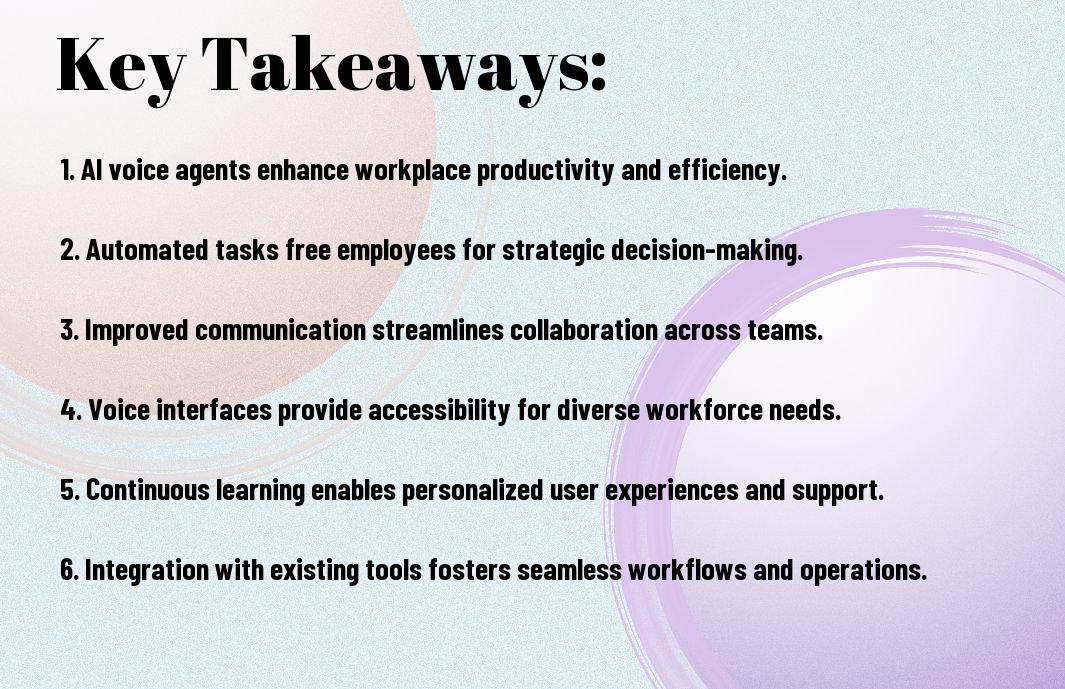
- Enhanced Productivity: AI voice agents streamline workflows by automating routine tasks, allowing employees to focus on strategic initiatives.
- Improved Communication: Voice agents facilitate more natural interactions, breaking down language barriers and enhancing collaboration among global teams.
- Personalized Experiences: AI voice agents can learn user preferences, tailoring responses and recommendations to boost employee satisfaction and performance.
- Data-Driven Insights: By analyzing conversations and interactions, AI voice agents provide valuable data that can inform decision-making and improve operational efficiency.
- Workplace Flexibility: Voice technology supports remote and hybrid work models, enabling employees to stay connected and productive from various locations.
The Rise of AI Voice Agents
For many businesses, AI voice agents have transitioned from experimental technology to necessary components of daily operations. Their ability to streamline workflows and enhance customer interactions makes them increasingly desirable. This rise reflects the evolving landscape of work, where efficiency and adaptability are paramount. As more organizations adopt these agents, you will see significant shifts in how tasks are completed and how employees interact with technology.
Definition and Functionality
Against conventional software applications, AI voice agents leverage natural language processing and machine learning to facilitate human-like interactions. They serve as virtual assistants, capable of understanding spoken commands, answering queries, and executing tasks. Their functionality ensures that you can execute work-related activities hands-free, enhancing your overall productivity and engagement in a dynamic work environment.
Market Trends and Adoption Rates
Adoption of AI voice agents is accelerating across various industries, driven by their effectiveness in enhancing user experience. Businesses are increasingly recognizing the potential of these tools to improve efficiency and reduce operational costs. As organizations integrate voice agents into their systems, you may experience a shift in how work is performed and how communication flows within your workplace.
At present, AI voice agents are not only prevalent in tech-savvy companies but are also gaining traction in sectors such as healthcare, retail, and customer service. Data shows that adoption rates are soaring, with many businesses planning to implement voice technology in the near future. This trend suggests your workplace will increasingly leverage AI-driven solutions, transforming how tasks are executed and driving innovative strategies for better customer engagement.
Enhancing Productivity in the Workplace
The incorporation of AI voice agents into the workplace is creating new opportunities for productivity gains. By automating repetitive tasks and providing instant access to information, these tools enhance your efficiency and allow for a more streamlined workflow. As discussed in How Artificial Intelligence Can Help Us Build a More …, leveraging AI can transform the way you approach daily responsibilities.
Task Automation
Between managing emails, scheduling meetings, and compiling data, you often find your day filled with repetitive tasks. AI voice agents can alleviate this burden by automating these duties, allowing you to focus on more strategic aspects of your job. This allows for better time management and enhances overall productivity.
Streamlined Communication
About 70% of professionals cite poor communication as a primary obstacle to productivity. AI voice agents assist by streamlining communications, enabling you to relay information quickly, schedule reminders, and easily access data to facilitate conversations. This leads to prompt decision-making, enhancing your collaborative efforts.
Considering the rapid pace at which workplace communication is evolving, adopting AI voice agents can significantly improve how you interact with your team and clients. By automating responses to common inquiries and summarizing key points from discussions, these agents allow you to maintain focus on high-level tasks. This streamlined approach fosters a more cohesive workplace environment and promotes effective collaboration.

Transforming Customer Interactions
Unlike traditional customer service approaches, AI voice agents enhance how businesses interact with customers by providing seamless, efficient support. These intelligent systems streamline communication, enabling your team to handle inquiries faster and more accurately, ultimately improving overall customer satisfaction. As these agents learn from interactions, they become more adept at understanding your customers’ needs, predicting their requirements, and personalizing responses. This transformation not only optimizes operations but also fosters long-term relationships with your clientele.
AI Voice Agents in Customer Service
Below are several ways AI voice agents are revolutionizing customer service. These agents can handle routine inquiries 24/7, reducing wait times and ensuring your clients receive immediate assistance. By utilizing natural language processing, they can understand and respond to complex queries, providing support without the need for human intervention. This allows your customer service representatives to focus on high-value tasks while ensuring customers receive timely help for their issues.
Improving User Experience
Interactions with AI voice agents can greatly enhance user experience by making communication more intuitive and accessible. Customers appreciate having their questions addressed in real-time, without navigating through complicated phone trees or waiting on hold for extended periods. The conversational nature of these agents makes it easier for users to express their concerns, leading to quicker and more satisfactory resolutions. Consequently, this improved experience can boost customer loyalty and create a positive brand image.
In addition, the ongoing development and machine learning capabilities of AI voice agents allow them to continuously improve user experiences. They adapt to your customers’ preferences and patterns, refining their responses over time. This personalized approach ensures that interactions feel more human and relatable, making it easier for your clients to engage with your brand. By integrating AI voice agents into your customer service strategy, you can foster a more dynamic, responsive, and memorable user experience, setting the stage for long-lasting relationships.
Impact on Workforce Dynamics
Not all workers will face negative consequences as AI voice agents integrate into the workplace. The dynamics of workforce interactions are shifting, leading to new collaborations between humans and technology. Your ability to adapt to these changes will be key in leveraging the benefits of AI, enhancing productivity while fostering a more efficient work environment.
Job Displacement Concerns
With the rise of AI voice agents, many professionals are understandably worried about job displacement. As these technologies become more capable, there is a fear that your job could become obsolete, forcing you to rethink career paths and skillsets. Addressing these concerns is necessary for ensuring a smoother transition into the future of work.
New Job Opportunities
Dynamics shift in the workplace often lead to the emergence of new job opportunities. As businesses adopt AI voice agents, you may find roles focused on developing, managing, and maintaining these technologies. Moreover, your expertise in collaboration between humans and AI can open doors to positions in analytics, design, and customer experience enhancements.
Considering the transformative potential of AI voice agents, you should look beyond potential drawbacks and recognize the opportunities they create. Engaging in upskilling and continuous learning in areas like AI management, user experience design, and voice technology development will significantly enhance your employability. Additionally, roles that bridge the gap between human creativity and AI efficiency will become increasingly important, leading to a more diverse skill set in the workforce. Embracing these changes could pave the way for a rewarding career in a technology-driven future.
Ethical Considerations
To ensure that AI voice agents positively influence the workplace, you must address various ethical considerations. This includes understanding the implications of their decision-making processes and their impact on employment dynamics. As Shaping the future of work with artificial intelligence suggests, it’s vital to foster an environment that balances innovation with ethical practices.
Data Privacy Issues
Along with the potential benefits, AI voice agents raise significant data privacy concerns. You are likely to share sensitive information while interacting with these agents, which could lead to unauthorized use or breaches of personal data. Safeguarding your privacy should be a top priority for organizations deploying such technologies.
Accountability and Transparency
Transparency in how AI systems operate is important for building trust. You need clarity on how decisions are made by AI voice agents and how they impact your work environment. This transparency will help ensure you feel secure in using these technologies without fear of negative repercussions.
Indeed, accountability is a critical aspect of implementing AI voice agents in the workplace. As you engage with these technologies, it is important that organizations establish clear guidelines and regulations to delineate responsibilities. This means you should have recourse if an AI system makes a mistake or if there are unintended consequences. By addressing these issues, companies can foster a safe and equitable working environment while harnessing the power of AI.
Future Trends and Innovations
Despite the rapid advancements already made, the landscape of AI voice agents is expected to evolve further in ways you might not anticipate. Emerging technologies are set to enhance their capabilities, making them integral to your workplace dynamics. As organizations adopt more sophisticated solutions, you will likely see a shift in how teams collaborate and communicate, ultimately reshaping your work environment.
Advancements in Natural Language Processing
Trends in natural language processing are significantly enhancing your interactions with AI voice agents. Improved algorithms enable these systems to understand nuances and context better than ever before. This progression offers you a richer experience, allowing for more fluid conversations and minimizing misinterpretations, thereby increasing productivity in your daily tasks.
Predictions for AI Voice Agents in Workspaces
The future of AI voice agents in your workspace shows immense potential, with increased personalization and integration into various tools and platforms. As these technologies adapt to your specific needs, they will streamline workflows, making your tasks more efficient and intuitive. Ultimately, these voice agents will become indispensable partners in how you navigate your professional responsibilities.
Another expected trend is the adoption of voice agents in managing complex tasks and data analytics. As you find yourself inundated with information, these systems will assist in organizing and interpreting data, allowing you to focus on strategic decision-making. This shift will empower you to leverage AI in ways that enhance both individual and team performance, fostering a more collaborative and productive workplace.
Conclusion
With these considerations, you can see how AI voice agents are not just a trend but a transformative force in the workplace. As these technologies evolve, they enhance your productivity, streamline communication, and reshape how you interact with information. Embracing AI voice agents can lead to greater efficiency and collaboration in your tasks, paving the way for innovative work practices that can empower you and your organization in the future.
Q: How are AI voice agents enhancing productivity in the workplace?
A: AI voice agents streamline various tasks by allowing employees to interact with technology through natural language. By providing hands-free assistance, they enable users to schedule meetings, retrieve information, and manage tasks efficiently. This capability reduces the time spent on mundane activities, allowing workers to focus on more strategic and creative aspects of their jobs. The integration of voice commands into everyday tasks not only speeds up processes but also fosters a more collaborative environment as team members can communicate seamlessly while multitasking.
Q: What role do AI voice agents play in improving customer service?
A: AI voice agents are becoming a significant asset in customer service by enabling companies to offer 24/7 support and respond rapidly to customer inquiries. They can handle a variety of tasks, such as answering FAQs, guiding users through processes, and even resolving simple issues autonomously. This availability ensures that customers receive timely assistance, enhancing their experience and satisfaction. Furthermore, AI voice agents can analyze interactions and gather insights to constantly refine their capabilities, allowing companies to improve their service quality continuously.
Q: How can companies ensure the successful implementation of AI voice agents in their work processes?
A: To successfully integrate AI voice agents, companies should begin by identifying specific areas where these tools can add value, such as project management or customer interaction. Educating employees about the technology and its potential uses is important to encourage adoption. Additionally, businesses should focus on selecting the right AI systems that align with their needs and provide a seamless user experience. Ongoing training and feedback mechanisms are imperative to refine the AI’s performance and address any challenges that may arise during its implementation. By fostering a culture of adaptability and innovation, companies can maximize the benefits of AI voice agents in their workflows.