
There’s an exciting evolution happening in telemedicine with the rise of AI voice agents, transforming how you engage with healthcare services. These intelligent systems are not only enhancing communication but also streamlining patient care, making it more efficient and accessible for you. As you explore the benefits of this technology, you may want to research into The Voice of Healthcare: How AI is Revolutionizing Patient … to see how AI is tailoring healthcare experiences for individuals like yourself.
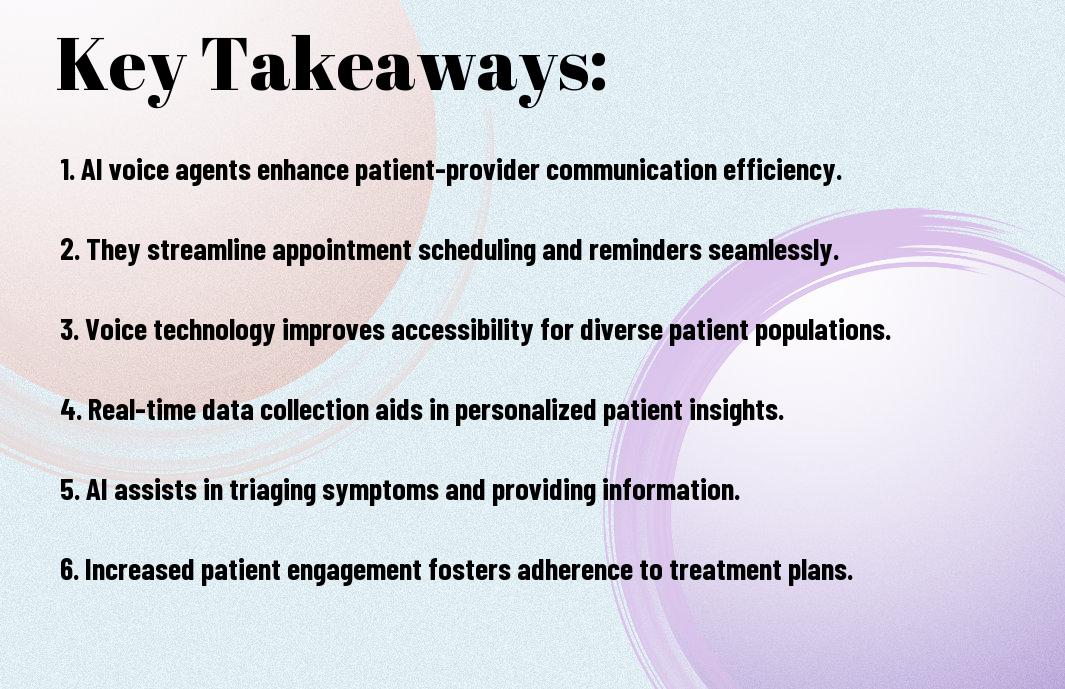
Key Takeaways:
- Enhanced Accessibility: AI voice agents improve patient access to healthcare services, allowing for 24/7 communication without the need for in-person visits.
- Efficient Triage: These agents can efficiently assess symptoms and guide patients to the appropriate level of care, streamlining the triage process.
- Personalized Interaction: AI voice technology enables tailored conversations based on patient history and needs, enhancing the overall patient experience.
- Reduced Workload: By handling routine inquiries and administrative tasks, AI voice agents free up healthcare professionals to focus on more complex patient needs.
- Data Collection: Voice agents facilitate the collection of patient data in real-time, contributing to better health monitoring and decision-making for providers.
The Rise of AI Voice Agents in Healthcare
For years, technological advancements have shaped the healthcare landscape, and AI voice agents are becoming increasingly prominent. These innovative tools enhance telemedicine by improving communication and access to healthcare services. With the potential to streamline patient interactions and reduce the burden on healthcare providers, AI in Telemedicine: Launching New Avenues in Healthcare highlights how these agents are paving the way for improved patient care.
What are AI Voice Agents?
Behind the scenes, AI voice agents utilize natural language processing and machine learning to understand and respond to user queries. These digital assistants can schedule appointments, provide medical information, and support patient engagement, all while offering a personalized experience that meets your healthcare needs.
Current Applications in Telemedicine
Below are several current applications where AI voice agents are transforming telemedicine. From answering patient questions to assisting in triage, these agents enhance the quality and accessibility of healthcare services.
Also, you will find that AI voice agents are increasingly used for remote patient monitoring, medication reminders, and symptom assessment. By integrating these agents into your telemedicine practices, you can improve patient satisfaction and streamline workflows, enabling healthcare professionals to focus more on direct patient care while ensuring patients feel supported and informed.
Enhancing Patient Interaction
If you are looking to improve the way patients interact with your healthcare services, AI voice agents offer a powerful solution. These intelligent systems can facilitate smoother communication by understanding patient queries in natural language and providing instant responses. By integrating these tools into your telemedicine practice, you can enhance patient satisfaction, encouraging more proactive engagement in their health management. This not only streamlines workflows but also fosters a more responsive care environment.
Improving Accessibility
On a fundamental level, AI voice agents significantly enhance accessibility for your patients. They can interact with patients 24/7, breaking down barriers related to traditional appointment scheduling or healthcare inquiries. This means that regardless of time or location, you can ensure that patients have seamless access to vital information and services, accommodating those with varying schedules and mobility challenges.
Personalizing Patient Engagement
For optimal patient engagement, utilizing AI voice agents allows you to tailor interactions based on individual patient profiles. These agents analyze data, preferences, and medical histories to deliver personalized communication and recommendations, making your interactions feel more relevant and supportive. By considering each patient’s specific context, you can help foster trust and improve compliance with treatment plans.
Plus, personalizing patient engagement through AI voice agents can lead to improved health outcomes. By sending tailored reminders for medication, appointments, or follow-up care, you ensure that patients are more likely to adhere to their care plans. Additionally, having conversations that reflect their unique needs and preferences makes patients feel valued and understood, which is necessary for fostering long-term relationships in healthcare. This targeted approach ultimately contributes to a more effective telemedicine experience, enhancing both satisfaction and health trajectories.
Data Management and Privacy Concerns
Your use of AI voice agents in telemedicine can significantly enhance patient care, but it brings to the forefront complex data management and privacy concerns. As these technologies collect, store, and process sensitive health information, ensuring the security and privacy of this data becomes paramount. You must be aware of the challenges surrounding data breaches, unauthorized access, and the ethical implications of handling patient data.
Ensuring Data Security
Before implementing AI voice agents in your telemedicine practice, it is imperative to establish robust data security measures. This involves protecting patient information through encryption, secure servers, and regular security audits. By proactively addressing potential vulnerabilities, you can maintain trust with your patients and safeguard their sensitive data against breaches.
Compliance with Healthcare Regulations
By integrating AI voice agents, you must also prioritize compliance with healthcare regulations like HIPAA. These regulations dictate how patient information should be managed, shared, and protected to ensure privacy and security. Adhering to these standards is not just a legal obligation; it builds credibility and trust with your patients.
Even with the rapid advancement of technology in telemedicine, compliance with healthcare regulations remains a non-negotiable aspect. You are tasked with understanding the specific requirements that govern data handling in your region, such as obtaining patient consent before data collection and ensuring secure storage protocols. Being proactive about compliance not only protects your practice from legal repercussions but also enhances patient confidence in using your services.
Challenges and Limitations
After exploring the potential of AI voice agents in telemedicine, it’s necessary to address the challenges and limitations that may hinder their effectiveness. You may face obstacles ranging from technological constraints to issues around patient trust. While these AI solutions carry significant promise, understanding their limitations will help you navigate their implementation in patient care more effectively.
Technological Barriers
For AI voice agents to be successful in telemedicine, they require robust technology that can seamlessly integrate with existing healthcare systems. You might encounter challenges with the compatibility of different platforms, data security concerns, and the need for reliable internet access. These barriers can impact the overall experience for both healthcare providers and patients.
Patient Trust and Acceptance
Against a backdrop of skepticism, gaining patient trust in AI voice agents can be challenging. You could find that many individuals are initially hesitant to engage with technology, preferring human interaction for medical consultations. Their past experiences with technology or concerns about accuracy and data privacy can influence their willingness to embrace AI solutions.
With effective communication and education about the advantages of AI voice agents, you can help foster greater acceptance among patients. Providing clear information on how these technologies operate, ensuring transparency regarding data handling, and emphasizing their potential to enhance care can ease concerns. Building a positive relationship between technology and patient experience may lead to improved engagement and satisfaction in telemedicine.

Future Trends in AI Voice Agents
Unlike traditional methods of patient engagement, AI voice agents are set to revolutionize telemedicine by offering personalized interactions and efficient support. As technology continues to advance, these agents will become more adept at understanding patient needs, enhancing communication, and streamlining healthcare processes. You can expect to see a blend of voice recognition, natural language processing, and machine learning that will elevate your experience as a patient, ultimately leading to improved outcomes.
Innovations in Voice Technology
Around the world, innovations in voice technology are paving the way for more adaptive and responsive healthcare systems. With advancements such as emotion detection and contextual understanding, voice agents will soon be able to identify your emotional state and tailor their responses accordingly, creating a more empathetic patient experience. These enhancements will facilitate smoother interactions and potentially improve trust and satisfaction within telemedicine.
Expanding Telemedicine Services
Future developments in AI voice agents are set to significantly expand telemedicine services, allowing patients to access care more easily than ever. As these technologies improve, you can look forward to more comprehensive remote healthcare solutions, from obtaining health updates to scheduling appointments—all through simple voice commands.
Technology will enable healthcare providers to utilize AI voice agents for a broader range of services, from managing chronic conditions to facilitating mental health support. The increased accessibility of these services means that you can receive timely care from the comfort of your home, while healthcare providers can efficiently address a larger patient base. In turn, this allows for a more resilient healthcare system that better meets your evolving needs as a patient.
Final Words
Summing up, AI voice agents are transforming telemedicine by enhancing patient care through efficient communication and personalized interactions. By integrating these advanced technologies into your healthcare practices, you can improve patient satisfaction and accessibility while streamlining workflows. Embracing this innovative approach not only positions you at the forefront of healthcare evolution but also empowers your patients with more effective, on-demand solutions to their health concerns.
Q: How do AI voice agents enhance communication between patients and healthcare providers?
A: AI voice agents facilitate seamless communication by leveraging natural language processing to interpret and respond to patient inquiries in real-time. With the ability to recognize common medical terms and phrases, these voice agents can assist patients in scheduling appointments, understanding treatment plans, and answering frequently asked questions. Their 24/7 availability ensures that patients can access information whenever needed, improving overall satisfaction and engagement in their healthcare journey.
Q: What are the benefits of utilizing AI voice agents in telemedicine for remote patient monitoring?
A: AI voice agents play a significant role in remote patient monitoring by providing ongoing communication and support. They can prompt patients to report their symptoms, medication adherence, and vital signs, which can be relayed back to healthcare providers for timely intervention. This continuous feedback loop not only empowers patients to take control of their health but also enables providers to make informed decisions based on real-time data. Furthermore, the use of AI voice agents can reduce the burden on healthcare staff, allowing them to focus on more complex patient needs.
Q: Are there any privacy concerns associated with the use of AI voice agents in telemedicine?
A: Yes, privacy concerns are an important consideration when implementing AI voice agents in telemedicine. Ensuring the security of patient data is imperative, and developers must adhere to strict regulations and standards, such as HIPAA, to protect sensitive information. AI voice agents should employ encryption and secure data storage methods to safeguard patient interactions. Additionally, healthcare providers should inform patients about how their data is collected, used, and protected to foster trust and comply with legal requirements.

