
Many individuals rely on AI voice agents for daily tasks, yet it’s crucial to consider how safe your information truly is. As these technologies become increasingly integrated into your life, understanding the potential risks and data vulnerabilities they pose is vital. From privacy concerns to data breaches, your personal information could be at stake. This post will explore various aspects of data security in the context of AI voice agents, guiding you on how to protect yourself effectively. For further insights, check out The Risks of Voice Technology.
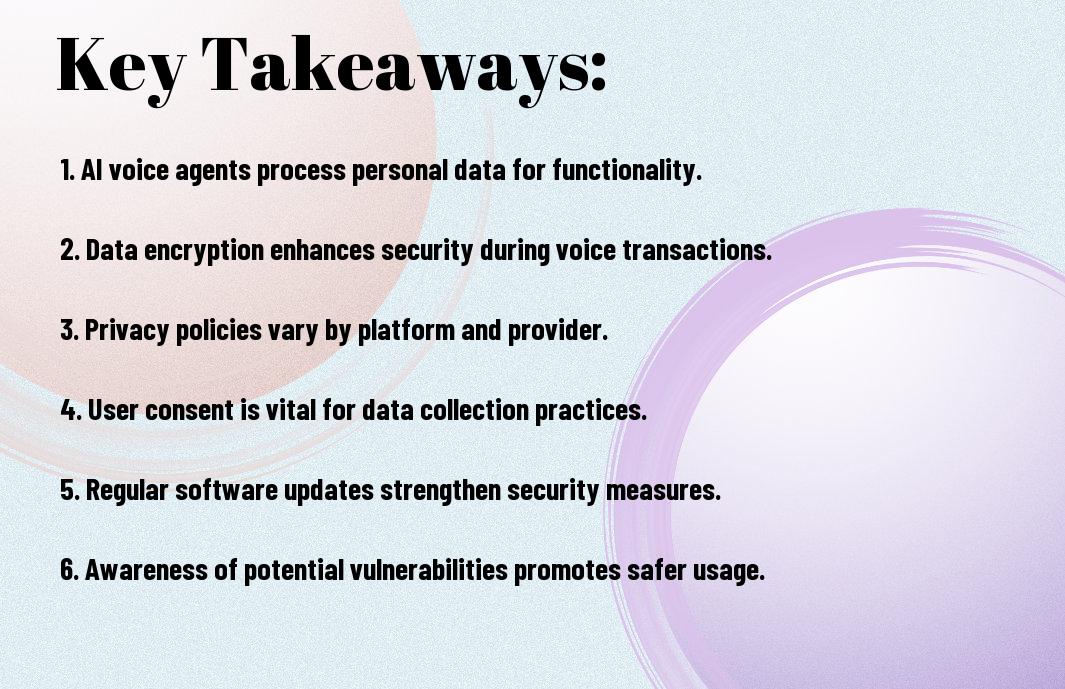
Key Takeaways:
- Data Vulnerability: AI voice agents can be susceptible to hacking, raising concerns about the safety of personal information.
- Privacy Policies: Users should carefully review the privacy policies of AI voice agent services to understand how their data is collected, stored, and used.
- Encryption Measures: Employing strong encryption methods is necessary to protect voice data from unauthorized access.
- User Control: It’s important for users to have control over their data, including options to delete past interactions and disable recording features.
- Continuous Monitoring: Regular monitoring and updates of AI systems can help mitigate risks and improve data security.
Understanding AI Voice Agents
Before delving into the complexities of AI voice agents, it is imperative to grasp their essence. These technologies are changing how we interact with devices and systems. For an in-depth exploration of their implications on privacy, you can check out A Deep Dive into Data Privacy in Voice AI Technology.
Definition and Functionality
Along with advancements in technology, AI voice agents, such as virtual assistants, provide personalized experiences by interpreting voice commands and executing tasks. They analyze spoken language through natural language processing, enabling them to perform functions ranging from simple queries to complex executions.
Types of AI Voice Agents
Voice agents can be categorized based on their capabilities and use cases. Here’s a breakdown of the different types you might encounter:
| Type | Description |
| Personal Assistants | Examples include Siri and Google Assistant. |
| Customer Service Bots | Used for handling customer inquiries. |
| Smart Home Devices | Devices like Amazon Echo that control smart homes. |
| Voice-controlled Applications | Apps allowing voice commands for actions. |
| Healthcare Assistants | Tools to assist in medical inquiries and help. |
Types of AI voice agents vary significantly in function and deployment. These include:
- Personal assistants for daily tasks.
- Customer service bots for direct responses.
- Smart home devices to enhance living spaces.
- Voice-controlled apps for hands-free use.
- Healthcare assistants for patient support.
Thou should continuously evaluate your exposure and interaction with these voice agents to ensure the privacy of your information.
Data Security Concerns
The growing reliance on AI voice agents raises significant data security concerns. As these digital assistants collect and process vast amounts of personal information, the risk of data breaches and unauthorized access becomes a pressing issue. You should be aware of how your information is stored and transmitted, as vulnerabilities in these systems can lead to potential exploitation and misuse of your data.
Potential Vulnerabilities
Below are some common potential vulnerabilities associated with AI voice agents:
- Unencrypted data transmission, making it easier for hackers to intercept.
- Weak authentication mechanisms that can be easily bypassed.
- Insufficient access controls for sensitive user data.
- Insecure third-party integrations that may expose your information.
Case Studies of Data Breaches
After examining previous incidents, it’s clear that AI voice agents are not immune to data breaches. Here are some notable cases that highlight the risks:
- In 2018, a major voice assistant company reportedly exposed over 150 million audio recordings due to a misconfigured server.
- In 2020, a data breach involving a popular smart speaker compromised the personal data of over 20 million users.
- By 2021, an incident revealed that over 1 million users’ recordings were accessed by unauthorized parties.
This information illustrates just how vulnerable voice-activated devices can be. Data breaches often result from inadequate security measures, leading to exposure of your personal data, including names, addresses, and even private conversations. The risks associated with these incidents emphasize the importance of ensuring that your AI voice agent employs robust security protocols.
Data Protection Measures
Your data protection should be a top priority when using AI voice agents. These systems implement various strategies to secure your information and mitigate the risks associated with data breaches. From user authentication to regulatory compliance, understanding the measures taken can give you peace of mind while interacting with your AI voice assistant.
Encryption and Secure Communication
About encryption, it plays a vital role in safeguarding your conversations and personal information. AI voice agents utilize advanced encryption protocols to ensure that data exchanged between your device and the service provider remains secure, making it nearly impossible for unauthorized users to intercept your sensitive information.
User Privacy Settings
User privacy settings empower you to control how much information you share and who can access it. By customizing these settings, you can decide whether to enable features like voice history storage and personalized ads. Adjusting these preferences helps to enhance your experience while protecting your personal data from unwanted exposure.
Also, it’s important to regularly review and update your privacy settings, as service providers may change their policies or features. By staying informed about the available options, you can take active steps to manage your data sharing preferences, ensuring that your privacy remains in your hands. This not only enhances your security but also helps in fostering a more tailored interaction with your AI voice agent.
Regulatory Landscape
Keep in mind that the regulatory landscape surrounding AI voice agents is evolving rapidly. Governments and regulatory bodies are increasingly focused on enhancing data protection laws to address the unique challenges posed by these technologies. As a user, understanding these regulations is vital for safeguarding your information and ensuring that your voice interactions are treated with the utmost confidentiality and respect.
Current Regulations Impacting AI Voice Agents
Beside various international and national frameworks like GDPR and CCPA, several industry-specific guidelines also come into play regarding AI voice agents. These regulations dictate how your personal data is collected, stored, and processed. Awareness of these existing rules can empower you to make informed choices about the voice technology you opt to use in your daily life.
Future Trends in Data Protection Laws
Future data protection laws are expected to further adapt to the rapid advancements in AI voice technology. This evolution may include stricter requirements on consent, transparency, and data minimization, which will directly affect how your information is handled and secured when using voice agents.
Trends indicate a growing emphasis on user empowerment and control over personal data. As AI voice technology continues to integrate into daily life, you may witness a shift towards laws that mandate clearer communication about data usage and give you more rights regarding your information. These laws aim to promote transparency, allowing you to have a say in how your voice data is utilized, thus enhancing your trust in these systems.
User Responsibility
Now that you are aware of the potential risks associated with AI voice agents, it’s important to recognize your role in safeguarding your personal information. By understanding how these devices operate and the data they collect, you can make informed choices regarding privacy settings and permissions. Ensuring your own data security not only protects you but also contributes to the overall integrity of AI technologies.
Best Practices for Data Security
Any effective strategy for maintaining data security starts with being proactive. Regularly update your security settings, restrict data access to only necessary applications, and use strong, unique passwords. Additionally, consider disabling voice recording features when not in use, as this can help minimize potential vulnerabilities. Always stay informed about technology updates and potential threats.
How to Safeguard Personal Information
After evaluating the features of your AI voice agent, take steps to ensure your personal data remains private and secure. This includes carefully reviewing privacy policies and settings before using any new features that the device may offer.
With an understanding of how voice agents function, you can implement several strategies to protect your personal information. For instance, you might consider using two-factor authentication for accounts linked to your voice agent. Additionally, routinely audit and delete any stored voice recordings or data categories that you no longer wish to retain. An ongoing commitment to security best practices will help you maintain control over your personal data in an increasingly connected world.
Industry Perspectives
Despite the many benefits AI voice agents offer, industry experts emphasize the importance of prioritizing data security. As these technologies become integrated into daily life, companies must navigate the fine line between innovation and safeguarding user information. You should be aware of the various measures in place and the collective responsibility within the industry to maintain your data’s confidentiality.
Insights from Security Experts
Among leading security professionals, concerns surrounding AI voice agents revolve around potential vulnerabilities and unauthorized data access. They highlight that while advancements are made in safeguarding personal information, users must remain vigilant in protecting their own privacy. You play a key role in understanding the risks and ensuring the security of your information.
Perspectives from AI Developers
From the viewpoint of AI developers, creating secure voice agents involves a delicate balance between functionality and privacy. Your demands for seamless user experiences often push developers to adopt innovative features, which can inadvertently increase potential security risks. Hence, they strive to implement robust security protocols while simultaneously enhancing user satisfaction.
A proactive approach to security is necessary for AI developers as they build systems designed to protect your data. This requires continuous testing and evaluation of their technologies to identify any potential weaknesses. You benefit from their commitment to integrating security measures seamlessly into the user experience, ensuring that your information remains safe while still enjoying the convenience of voice agents.
Final Words
On the whole, as you engage with AI voice agents, it’s vital to remain aware of the data security implications that accompany their use. You should take proactive measures to safeguard your personal information, such as regularly reviewing privacy settings and understanding how your data is stored and utilized. By staying informed and vigilant, you can enjoy the convenience of AI voice technology while ensuring that your information remains protected.
FAQ
Q: How do AI voice agents handle my personal data?
A: AI voice agents process and store personal data to provide personalized experiences and improve functionality. When you interact with these agents, they collect voice commands, preferences, and other relevant data. This information is typically encrypted and stored on secure servers. However, the specific management of your data often depends on the company’s privacy policy, which outlines how they collect, use, and protect your information. It is advisable to review these policies to understand how your data is managed.
Q: What steps are companies taking to ensure the security of my information while using AI voice agents?
A: Companies implement various security measures to protect user data while employing AI voice agents. These measures can include encryption, multi-factor authentication, and regular security audits. Many organizations also adhere to regulatory standards and frameworks to enhance their security practices. Additionally, they may provide users with settings to manage their privacy preferences, allowing you to control what data is shared and retained.
Q: What should I do if I have concerns about the data collected by AI voice agents?
A: If you are concerned about the data being collected by AI voice agents, you can take several actions. First, check the privacy settings on the device or application to adjust your data-sharing preferences. You can also review the provider’s privacy policy for detailed information on their data handling practices. Additionally, consider reaching out to the company’s customer support for specific questions or to request that your data be deleted. Being proactive about your privacy can help manage your information more effectively.
