
Many online marketers are discovering the importance of voice search optimization as AI voice agents continue to reshape user interactions. By tailoring your SEO strategies to meet the unique demands of voice search, you can significantly enhance your online visibility and engagement. This post will guide you through the vitals of optimizing for voice search and detail the benefits of Leveraging AI for Voice Search Optimization & … in your overall marketing strategy.
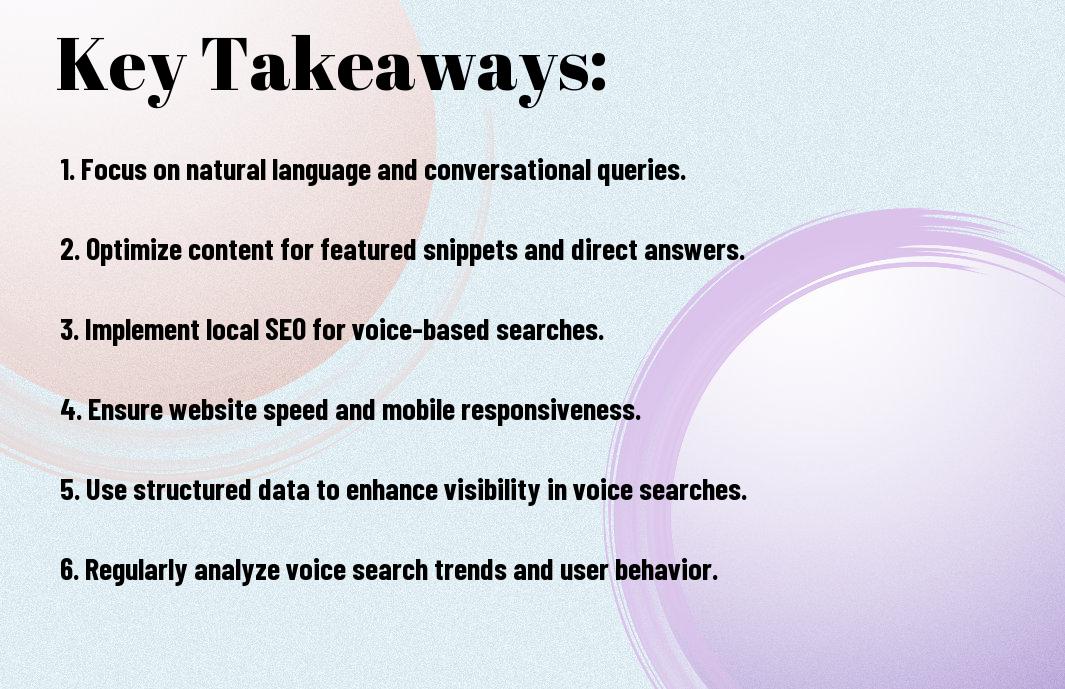
Key Takeaways:
- Understanding Voice Search: Familiarize yourself with the distinct differences between text-based searches and voice queries, focusing on conversational phrases.
- AI Voice Agents: Utilize advanced AI voice assistants like Siri, Google Assistant, and Alexa to analyze how users interact and improve your SEO strategies.
- Content Optimization: Create content that is structured to answer questions directly, as voice search often revolves around finding quick, concise answers.
- Local SEO Focus: Enhance local SEO efforts, as many voice searches are location-based, making it necessary to optimize for local business listings.
- Structured Data: Implement structured data markup to help search engines better understand your content, increasing the chances of appearing in voice search results.
Understanding Voice Search
To effectively harness voice search for your SEO strategy, you need to grasp its unique characteristics. Voice search is increasingly popular as users seek quick, informative responses delivered through AI voice agents. To enhance your knowledge, check out How to Use AI to Optimize Your Content for Voice Search, which provides valuable insights into this transformative technology.
The Evolution of Voice Search Technology
Among the various technological advancements, voice search has rapidly progressed from basic command recognition to sophisticated natural language processing. Today’s voice assistants, such as Amazon’s Alexa and Google’s Assistant, leverage deep learning and AI to understand context, enabling them to provide relevant answers and perform tasks with impressive accuracy.
Key Differences Between Text and Voice Search
At the core of voice search is its conversational nature, which contrasts with the more formal structure of text searches. Users tend to phrase voice queries as questions, while text searches often consist of keywords or phrases. This shift in how people search influences how you should optimize your content.
Indeed, the differences between text and voice search significantly impact your SEO efforts. Voice search typically involves longer, more natural phrases and questions, while text searches are mostly concise and keyword-focused. Understanding these distinctions helps you tailor your content to better match how users interact with voice searches, ultimately improving your online visibility and user experience.

The Role of AI Voice Agents
You may not realize it, but AI voice agents play a significant part in transforming how we conduct searches online. By utilizing advanced algorithms and natural language processing, these agents provide a more intuitive experience for users. As voice search continues to grow, optimizing for these AI systems is important for enhancing your SEO strategy, ensuring your content is easily accessible and relevant to voice queries.
Popular AI Voice Agents in the Market
The market is filled with a variety of AI voice agents such as Amazon’s Alexa, Google Assistant, Apple’s Siri, and Microsoft’s Cortana. Each of these platforms offers unique features and capabilities, allowing users to ask questions, control devices, and access information effortlessly. For SEO, understanding the nuances of each voice agent can guide how you tailor your content for better visibility in voice search results.
How AI Enhances Voice Search Capabilities
To understand how AI enhances voice search capabilities, consider the role of machine learning and data analysis. By continuously learning from user interaction and feedback, AI voice agents refine their understanding of language nuances, user preferences, and contextual relevance.
Agents equipped with AI can analyze vast datasets to comprehend user intent better. This enables them to return accurate and contextually appropriate responses to voice queries. Furthermore, advanced speech recognition allows these agents to understand diverse accents and dialects, broadening accessibility. This means that consumers are more likely to find your content through voice search when it aligns well with the natural phrasing and questions they tend to use. Therefore, optimizing for these aspects is important for staying competitive in the evolving landscape of voice search SEO.
Best Practices for Voice Search Optimization
After understanding the impact of voice search on consumer behavior, it’s important to implement effective optimization strategies. Focus on creating conversational content that aligns with natural language queries, ensuring your website is mobile-friendly and loads quickly. Engage your audience by prioritizing local SEO. By leveraging these best practices, you can enhance your visibility and improve user experience when they turn to voice assistants for answers.
Keyword Strategy for Voice Queries
About your keyword strategy, it’s important to think about how users phrase their questions when speaking. Voice searches often utilize natural language and longer phrases compared to typed queries, so consider incorporating question-based keywords and conversational phrases into your content. Focus on targeting local queries, as many voice searches stem from mobile devices used to find nearby services.
Structured Data and Schema Markup
With the rise of voice search, utilizing structured data and schema markup can significantly enhance your SEO efforts. By providing search engines with a clear understanding of your content, schema markup enables your website to appear more prominently in voice search results, especially for featured snippets.
Keyword implementation in structured data can help search engines contextualize your content, leading to more relevant voice search results. By marking up your content with schema, you increase the chances of being selected as a source for voice-activated responses. This not only improves your visibility but also enhances user experience by providing precise answers to their queries directly from your website.
Local SEO and Voice Search
Once again, voice search is transforming the way people find local businesses. As an increasing number of users turn to voice-activated devices when searching for nearby services, optimizing your website and content for local SEO becomes important. By understanding voice search behavior and improving your local presence, you’re better equipped to capture potential customers right in your area.
Importance of Local Listings
Search engines prioritize local listings, making it vital for you to claim and optimize your business profiles on platforms like Google My Business. Accurate local listings help users find important information such as your hours of operation, location, and customer reviews, ultimately influencing their decision to choose your business.
Optimizing for “Near Me” Searches
Above all, “near me” searches have surged due to the convenience of voice search, making local optimization a top priority. You should ensure your content incorporates relevant local keywords that reflect the services or products your audience seeks in your vicinity. This will enhance your chances of appearing in local search results.
Near the center of optimizing for “near me” searches is the need to focus on local keywords that people might use while speaking. Incorporating phrases like “best coffee near me” or “plumber nearby” into your content strategy enhances your relevance for voice search queries. Furthermore, ensure that your website is mobile-friendly and loads quickly, as most voice searches are conducted on mobile devices. By addressing these elements, you can significantly improve your visibility for local searches and attract more customers in your area.
Measuring Success in Voice Search Optimization
Now that you’ve implemented voice search optimization strategies, it’s necessary to measure their effectiveness. By tracking key performance indicators, you can determine how well your content is performing in voice search results. Focus on metrics like organic traffic growth, click-through rates, and user engagement to gain insights into your optimization efforts. Regular analysis will help you refine your strategies and ensure that your content remains relevant to voice search users.
Tools and Metrics for Tracking Performance
Metrics play a significant role in assessing the impact of your voice search optimization efforts. Utilize tools such as Google Analytics and Search Console to monitor organic traffic from voice search queries. Additionally, consider voice-specific analytics tools that can give you deeper insights into interaction rates and user engagement. By consistently tracking these metrics, you gain valuable data to refine your SEO approach.
Analyzing User Behavior through Voice Searches
One effective way to measure success in voice search optimization is by analyzing how users interact with your content. Take a closer look at voice search queries to understand user intent better and the types of questions being asked. This analysis can reveal trends and preferences among your audience, enabling you to tailor your content to meet their needs more effectively.
Performance in voice search is significantly influenced by understanding user behavior. By examining the types of queries that lead to your content, you can gain insights into what users are truly searching for. Look for patterns in the language they use and adjust your content to resonate with their preferences. This approach not only enhances your SEO strategy but also fosters a more user-centric experience, ultimately leading to better engagement and conversion rates.
Future Trends in Voice Search and AI
Unlike traditional search methods, the future of voice search and AI is rapidly evolving, opening new avenues for reaching customers. As the technology becomes more sophisticated, you can expect enhanced accuracy, multilingual capabilities, and personalized interactions that will transform how people engage with search engines. Staying ahead of these trends will be crucial for optimizing your SEO strategies, ensuring that you don’t miss out on potential traffic and engagement.
Predicting the Next Wave of Voice Search Technology
Search trends suggest that voice search will continue to grow exponentially, driven by advancements in natural language processing and machine learning. You should pay attention to the integration of voice assistants into everyday gadgets, making it simpler for users to interact using just their voices. Adapting your SEO strategies to incorporate conversational keywords and local search will prepare you for this next wave of technology.
The Impact of Voice Search on Content Creation
Any content creator must understand how voice search is reshaping the landscape of digital content. Voice search influences the type of information users seek and how they phrase their queries, prompting you to rethink your content strategy. Optimizing your content for voice queries can lead to increased visibility and better engagement with your audience.
Consequently, adopting a voice-first approach means creating content that is both concise and conversational. Incorporating FAQs and natural language into your copy will better align with how people vocalize their queries. This shift in focus will not only enhance your chances of appearing in voice search results but also improve user experience, making your content more appealing and accessible to a wider audience.
To wrap up
With this in mind, optimizing for voice search is an necessary strategy for enhancing your SEO efforts. By leveraging AI voice agents, you can tailor your content to match the conversational queries of users, ensuring that your website remains relevant and visible. You should focus on natural language processing, local searches, and structured data to improve your chances of appearing in voice search results. Embracing these techniques will empower you to stay ahead in the ever-evolving digital landscape and connect with your audience more effectively.
FAQ
Q: What is voice search optimization and how does it differ from traditional SEO?
A: Voice search optimization focuses on adapting content and SEO strategies specifically for voice search queries made through AI voice agents like Alexa, Google Assistant, and Siri. Unlike traditional SEO which often targets typed keywords, voice search queries are generally longer, more conversational, and phrased naturally. This optimization involves using key phrases that resemble how people speak in everyday conversations, ensuring content is structured in a way that answers questions directly and succinctly.
Q: How can businesses leverage AI voice agents to improve search visibility?
A: Businesses can enhance their search visibility by optimizing their content for voice search. This includes utilizing structured data to help AI voice agents understand and retrieve relevant information quickly. Creating an FAQ section on websites, incorporating long-tail keywords tailored to conversational queries, and ensuring mobile-friendliness can significantly boost the chances of being featured in voice search results. Additionally, maintaining a consistent NAP (Name, Address, Phone Number) across online platforms helps in local voice search optimization.
Q: What role does user intent play in voice search optimization?
A: User intent is paramount when optimizing for voice searches since voice queries are often aimed at finding information quickly and accurately. Understanding the underlying questions that users have can help businesses create content that directly addresses those needs. This involves not only identifying keywords but also interpreting the context and purpose behind inquiries. Focusing on user intent allows companies to develop comprehensive content strategies that resonate with voice search users, ultimately enhancing engagement and visibility.
